
Updates
On cutting, coding, shooting, and posting

It’s been just shy of two years since I last posted here. My bad. I had planned to write here more often, but not long after I wrote my last entry, we launched the Crackpots newsletter as part of the TrueAnon podcast. Since then, any of my thoughts that have seemed fit for an essay have ended up there. You should subscribe to Crackpots — not only will you get to read my thoughts on various topics, but also dispatches from Brace, Liz, and various of our brilliant friends and associates.
But I’ve been getting a steady drip of notifications that people are following me here, so I figured I’d write some general updates on what I’ve been up to that aren’t necessarily fit for Crackpots. I’ll warn you in advance that navel-gazing lies ahead, figuratively and very literally.
Fitness
This summer will mark 18 years since I started lifting weights. I don’t have much to say about workouts or nutrition that I haven’t already written or spoken about (e.g. in this Substack or on the episode of Doomscroll I did with Joshua Citarella, which people still occasionally mention to me). I generally don’t like to give advice about this stuff, particularly to strangers, because I don’t think anyone is really being held back by a lack of information; it’s the follow-through that’s difficult. Someone is either motivated to do it or they’re not, and there’s nothing I can tell them that’s going to make a difference. It’s up to each of us to figure out how to build on our strengths, shore up our weaknesses, and work around our limitations. I don’t have any special secret routine; what I have is years of consistent effort.
I recently finished another annual “cut,” i.e. a period focused on fat loss. If I mention this to someone, they often ask me what approach I took: was it keto? Intermittent fasting? Carnivore? The answer, as always, is that I didn’t follow a diet with a brand name. For 7 weeks (minus one weekend of travel) I measured and tracked everything I ate, which amounted to 2200-2300 calories/day. It was difficult, but not complicated. I was hungry; I was much less social. But I prefer to reach my goal in as short a time as possible by being 100% committed rather than allowing myself more flexibility but elongating the process. The only slightly new aspect for me this year was that I did zero cardio in the gym, but I walked a lot, averaging around 11k steps/day over this period. My pursuit of street photography dovetailed nicely with this goal.
On 4/13/26 I weighed 179 lbs with a 33.5” waist and a 43.5” chest; on 6/6/26 I weighed 165 lbs with a 31” waist and a 43” chest. I have a document with full before/after measurements going back to 2021. The measurements have changed only very slightly year over year (albeit in a positive direction) which is at once encouraging and discouraging, depending on how you look at it. I’m a very goal-oriented person. Fixing my eyes on the finish line makes it much easier to keep going. That’s why some people sign up for a competition — it’s a reason not to quit. Last year, when I was 40, I did a photo shoot with a photographer friend at the end of my cut. This year I just got some more casual photos with friends at the beach:
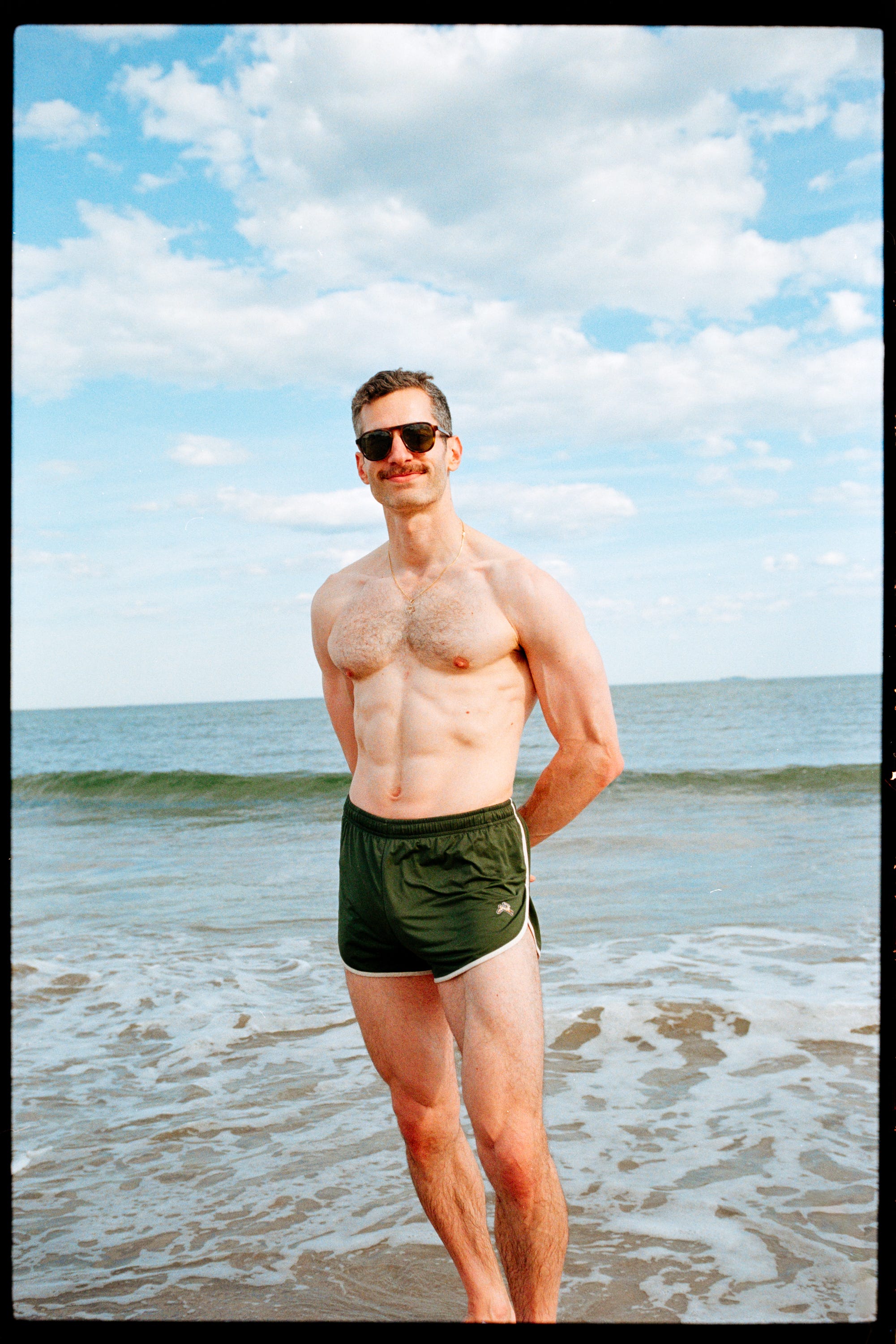
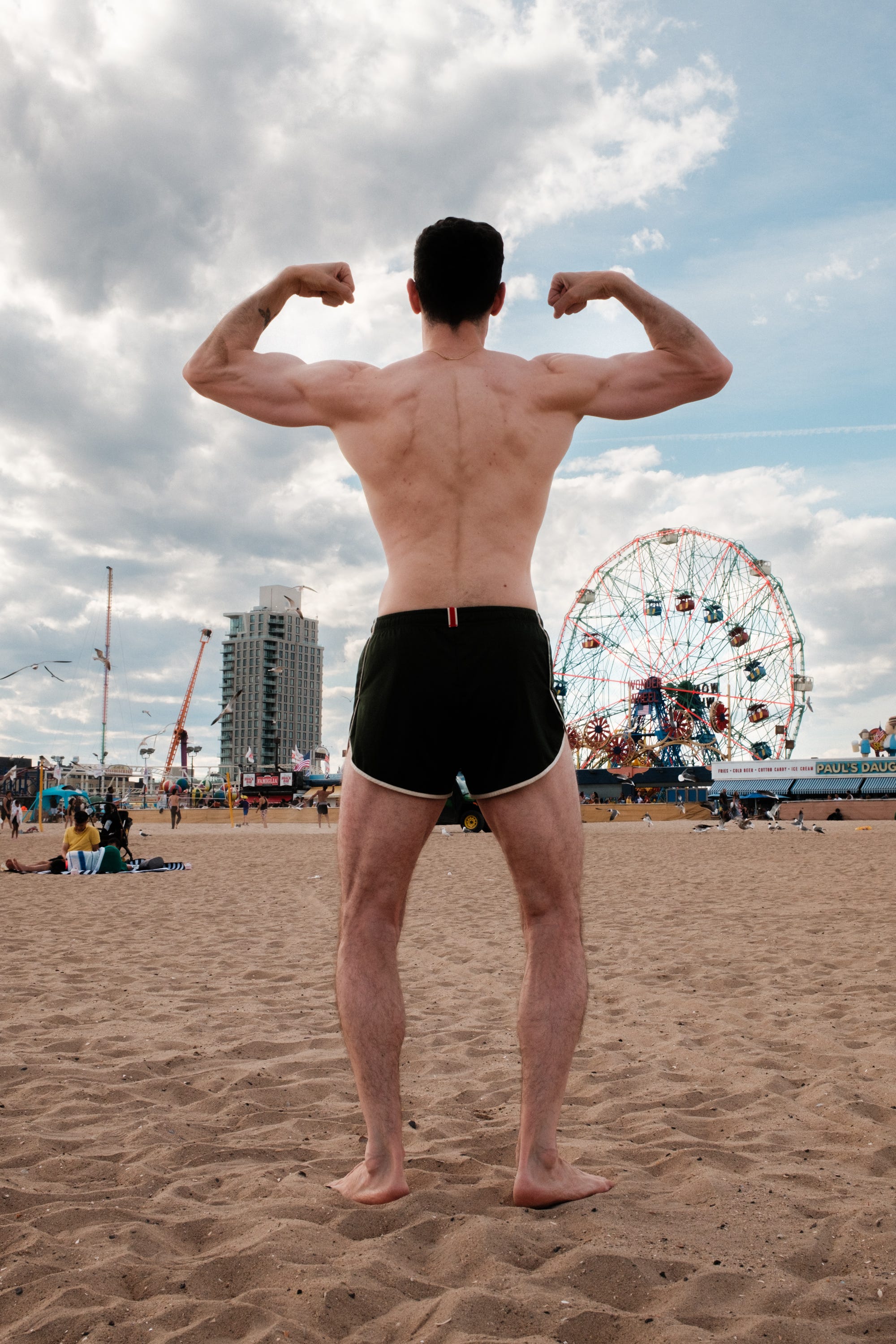
There were times when I asked myself what the point of it all is. Nobody is waiting at the end to give you a medal or throw a party. People generally do not want to hear about your diet or your workout routine at all (even if they ask you about it). But I think that despite the pain inherent in the process, my quality of life is better living this way than it would be otherwise. I do it to keep myself sharp, to test my limits, and to prove that I can, and that’s enough.
Phomo
I’m still working on Phomo, my photography app for iPhone. My initial concept for it was very different from what it’s become: It began as a better way to capture and organize my “outfit-of-the-day” photos. As I dove deeper into the technology (I’d never built a mobile app before) and more interested in photography, it evolved into a full replacement for the iPhone’s default Camera and Photos apps that lets you capture photos, edit them in various filmic styles, organize your library, and create photo grids. I made things difficult for myself by allowing the scope to get so broad; from a business perspective, it’s much wiser to stay narrowly focused, at least at first. But I have the luxury of freedom from any external pressures, so I get to chase whatever ideas capture my interest.
The app has about 1000 active monthly users now. I still haven’t run any ads for it; every time I decide I’m going to, I tell myself that I’ll do it once I publish the next round of improvements. Like with physical fitness, it can be difficult to strike a balance between pride in what I’ve already achieved and desire to achieve more. It’s better than it used to be, but worse than I’d like it to be; I’m pleased but not satisfied.
It’s an entirely solo project, and working on it has been slow lately. I tend to work in spurts. When I step away from programming for more than a couple of days it’s challenging to dive back in. The app is built in React Native, which ecosystem has come a very long way since I started this project, but the technological maturity is very spiky: Some features are simple to implement, others very difficult, and it’s often not obvious which will be which until you get into the nitty-gritty. LLM coding has also matured a lot, but is still full of footguns. If you’re not careful, you can waste a ton of ton of time and tokens on a wild goose chase.
I’m close to publishing a new release that mostly addresses tech debt, and should make the app run much more smoothly, which is satisfying; performance has been an uphill battle from the start. After that I hope to overhaul the image-processing pipeline and make the photo editing and film emulation best-in-class. And since this tends to come up when I talk about the app: I’m not currently working on an Android version, but it’s possible that I will someday.
Photography
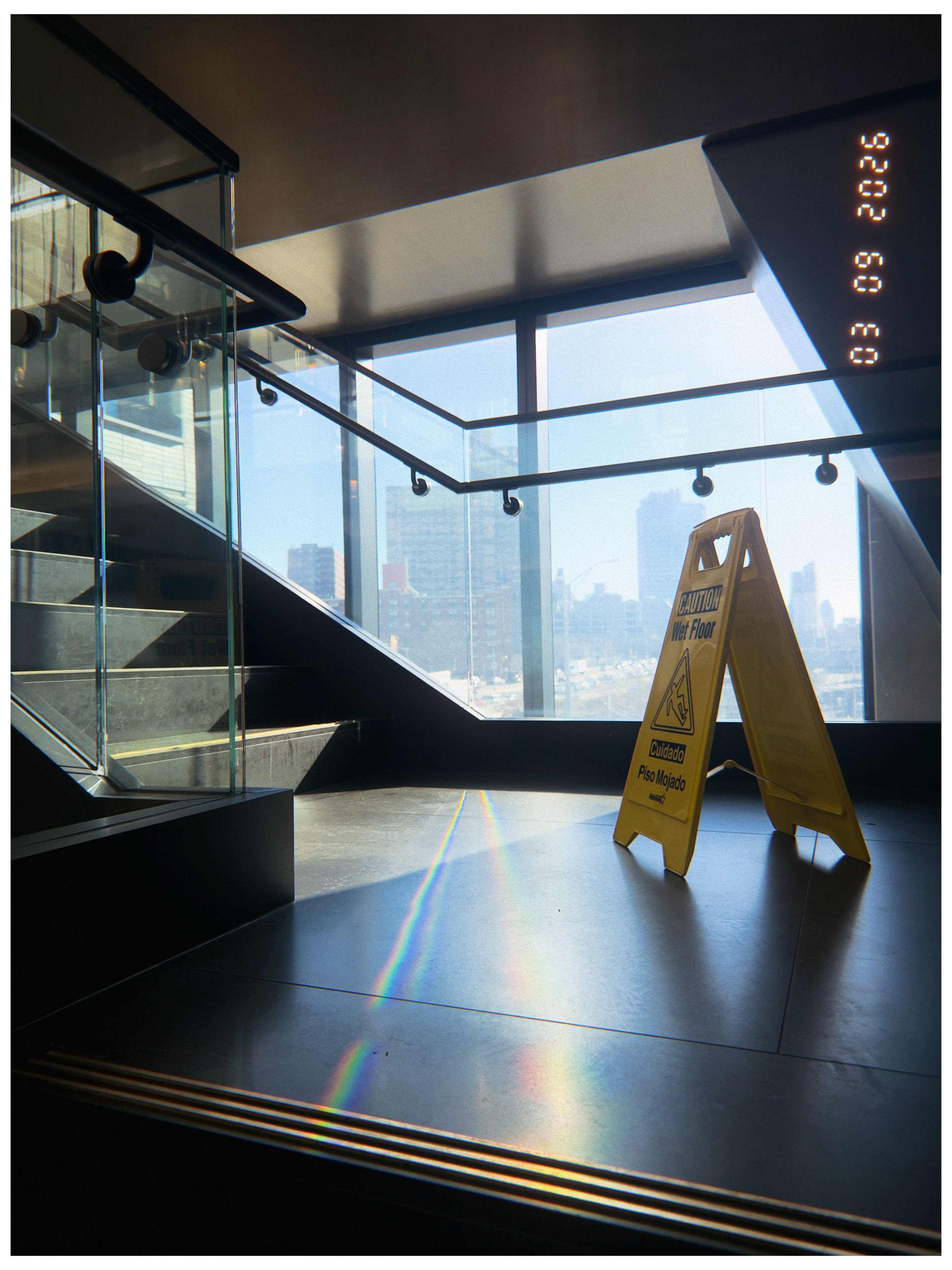
Last July I bought a Fujifilm X100VI, and soon afterwards I started carrying it with me every time I left the house. I’ve since developed a passion for street photography. I’ll write about my philosophy and approach in more depth sometime down the road. Similarly to my other pursuits, each time I feel like I have something to say about this that might be worth listening to, I’m struck by the opposing feeling that I’m still an utter novice, and to portray myself as knowledgeable on the subject would be pure hubris. I’m learning and experimenting and evolving so much that anything I write now I’d be liable to disavow within a few months.
I am shooting more film recently: I bought a pre-owned Leica M6 TTL in March. I think I’ve largely avoided the “gear guy” trap; my Fuji is fixed-lens (35mm equivalent) and I only own one lens for the Leica (a Voigtlander Ultron, also 35mm). My excitement about film has been recently rekindled since I started doing my own film scanning. I use a Sony A7RII with a Sony FE 90mm f/2.8 Macro lens (both acquired used) along with a film holder kit from Valoi.
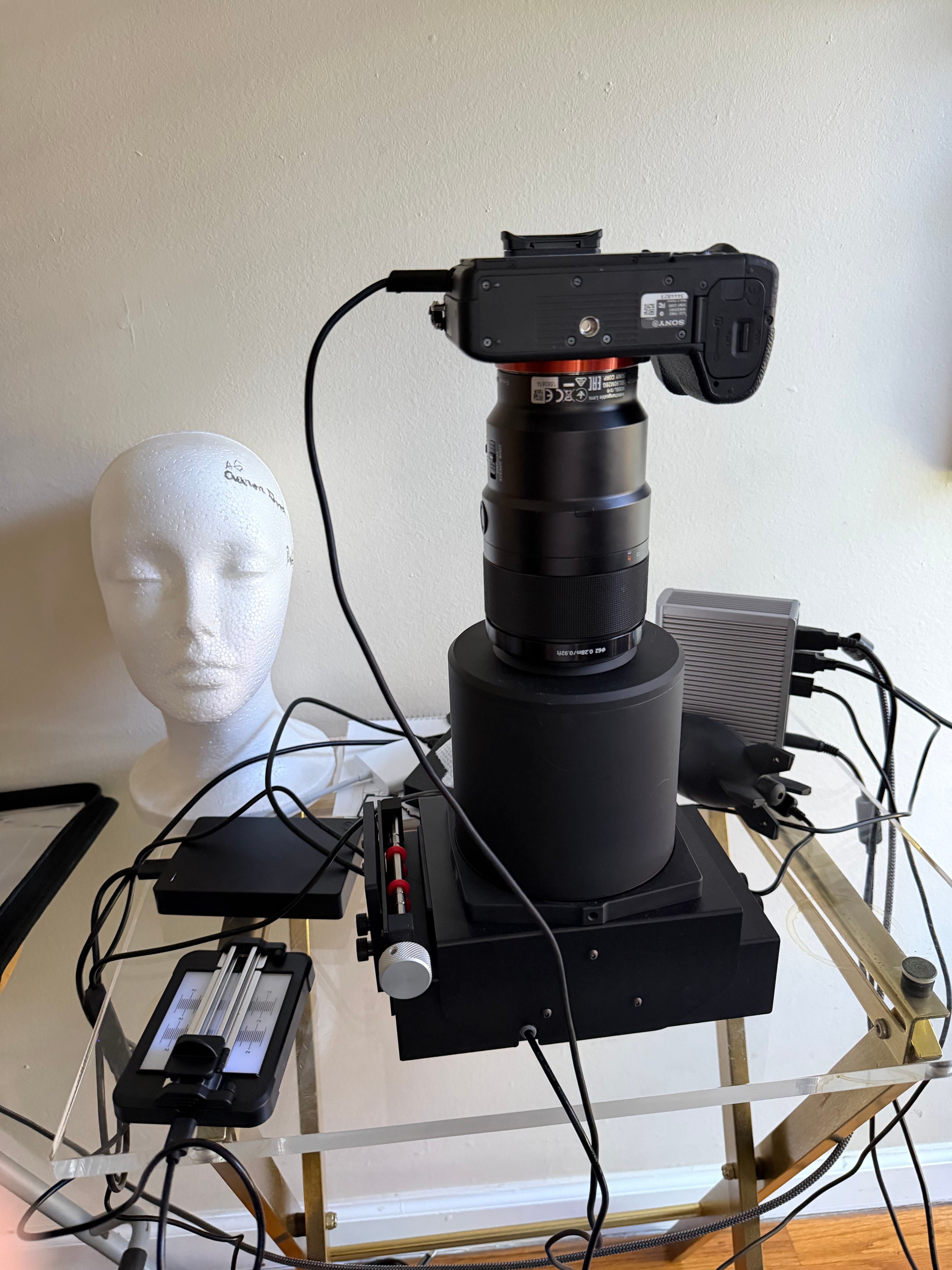
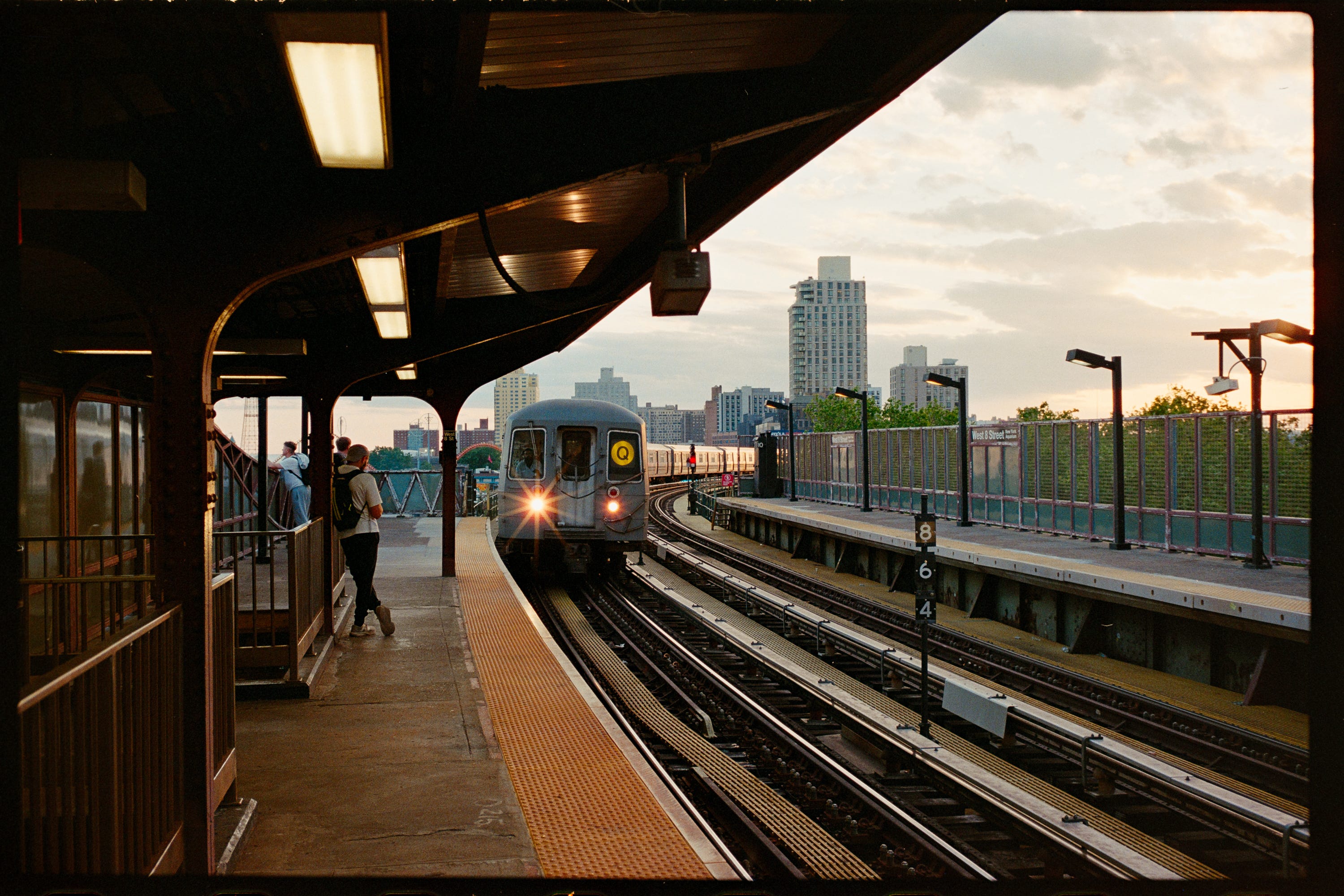
My only regret is not doing this sooner. I’ve reduced my cost from ~$25/roll for development plus the highest quality lab scans to ~$8/roll for development only, followed by home scanning. My scans are significantly sharper, and I maintain full control over the resulting color and contrast. I already wrote about this at greater length for Crackpots, but it’s a fallacy and a pet peeve of mine when photographers claim purism by saying they “don’t edit their film.” Unless you’re looking at the negative (or viewing slide film on a light table), your film has been edited, it’s just that the lab did it for you. Inverting a negative so that it can be viewed on the screen or the page is an interpretive process with no single objectively correct approach. Digital photography is similar; your device, whether it’s an iPhone or a dedicated camera, makes a series of choices about how to interpret its sensor data and render it as a visible image, and no set of choices is necessarily “realer” than another.
Instead of paying a lab to send me lossless files so I can alter the results of their scanning settings, now I can get my desired results directly from the negative. If things change in the future (e.g. I want to make a large print, or achieve a different look), or even if I were to somehow lose all of my digital data, I can always pull the negatives out of my binder and make a new scan.
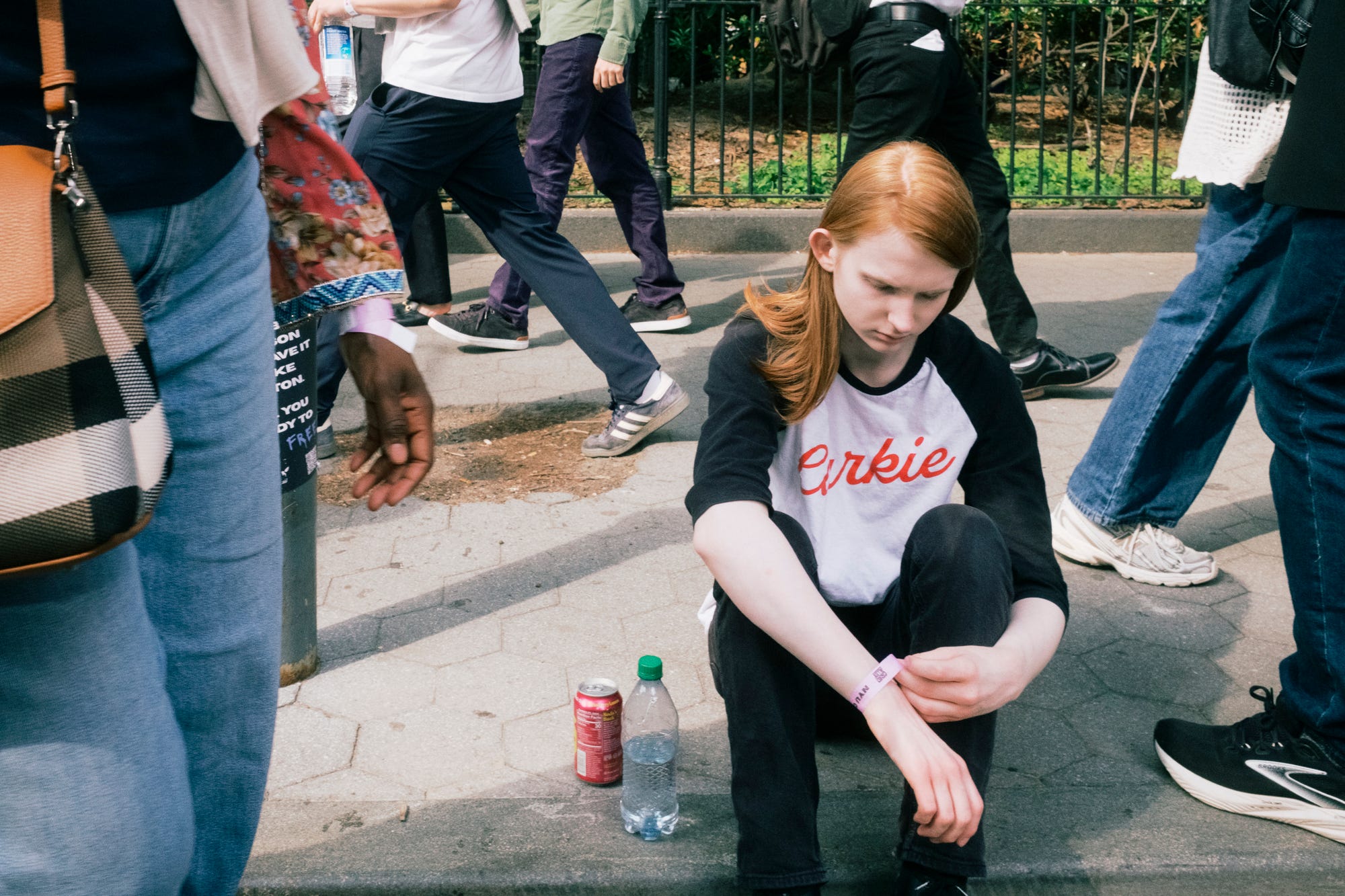
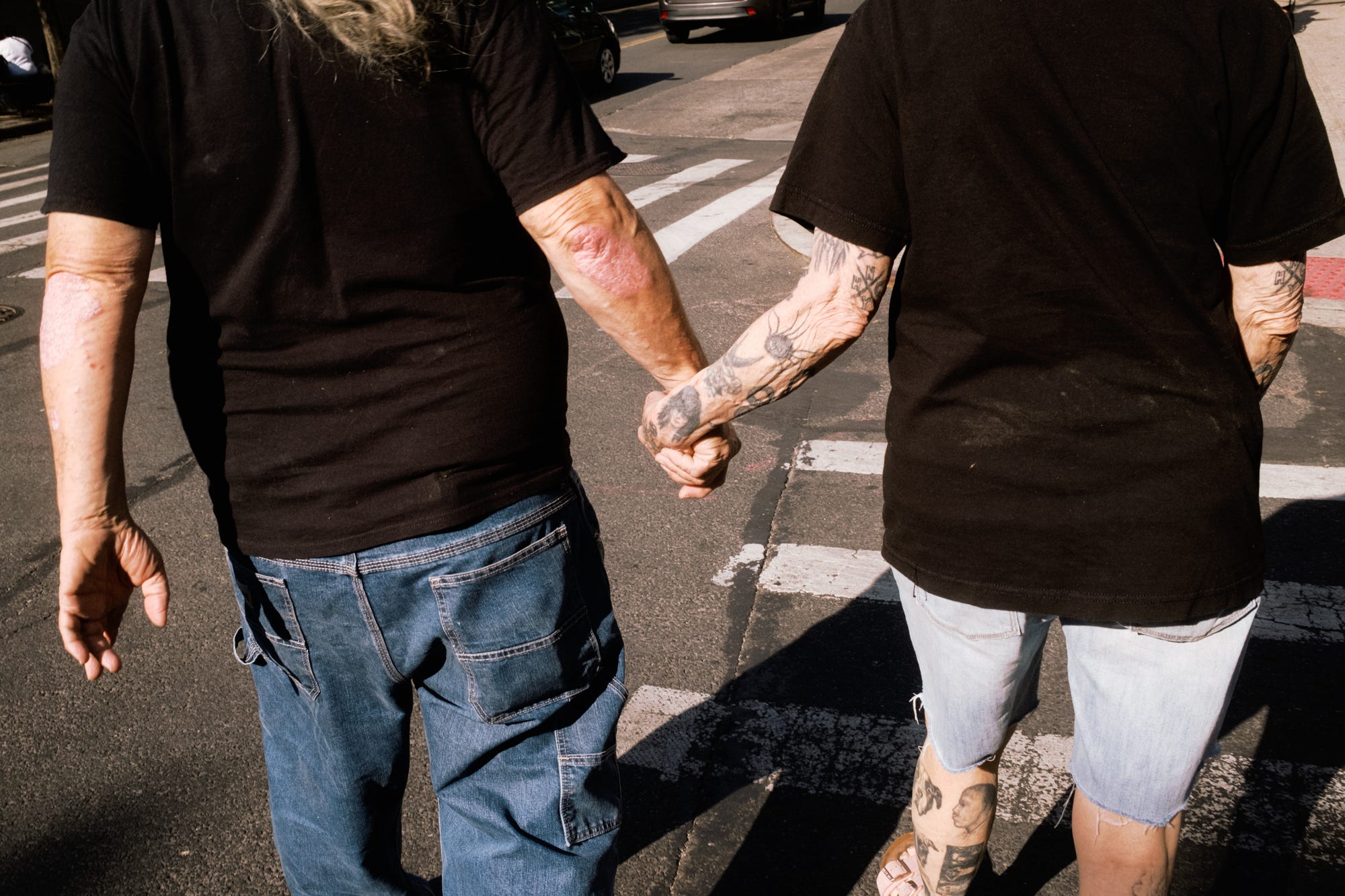
Technical details aside, I find street photography continues to be as challenging as it is rewarding. I just finished a 6-week workshop with Reuben Radding, a New York photographer whose work I admire. The workshop had 6 participants, and each week we were required to bring in a dozen new images for group critique. I highly recommend doing this or something like it for anyone who wants to raise the bar for their work.
Internet
Lastly, I want to talk about my presence on the internet, and why I want to change it up. I doubt that I need to detail the ills of social media to anyone reading this. My situation is outside the norm in some ways, in that my business and livelihood wouldn’t exist without social media, but in others it’s the same as for anyone else. These days, posting is often about material gain, even when it pretends like it isn’t. But monetization aside, I think we post because we want to feel understood, or failing that, at least to be seen. And besides, posting and scrolling are addictive. It’s like eating junk food: It tastes good, but doesn’t make you feel full, so you keep going until you’re sick.
I have formed many real relationships via social media, though. When I moved to New York almost 6 years ago, I knew lots of people here from the internet, and now I know them in reality. I met a previous long-term girlfriend via Twitter, which felt genuine and serendipitous. I’ve befriended people who I likely wouldn’t have met otherwise because we frequented the same online spaces.
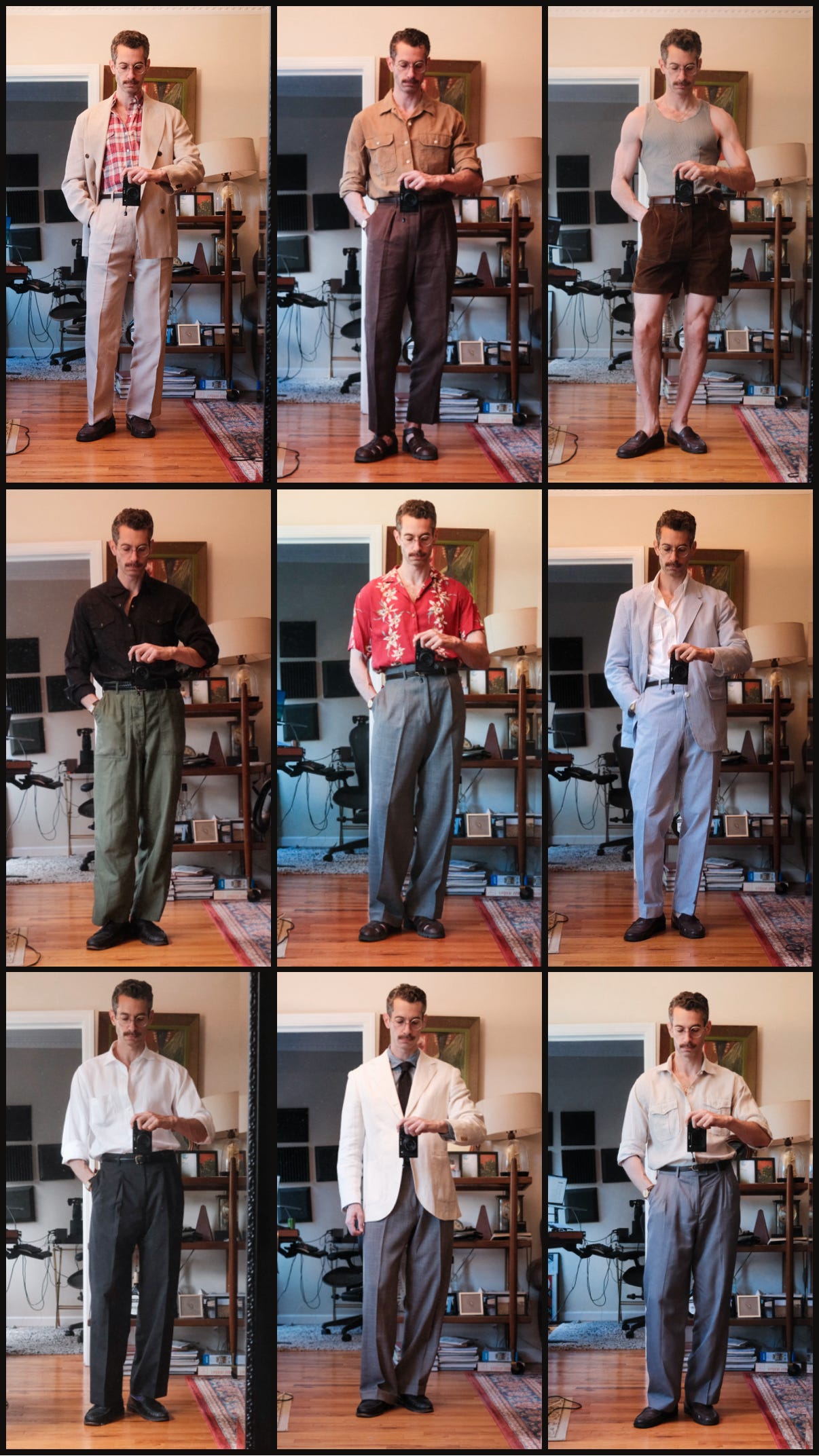
I started caring about clothes over a decade ago, and developed my taste and knowledge mostly via the internet at first. In 2019 I started taking and posting daily self-portraits to capture what I was wearing (which, as I mentioned earlier, provided the initial spark for making Phomo). I did it because I saw other people doing it, and then because I came to appreciate the routine. Whether it’s rational or not, sharing the image helps me see it objectively, and knowing I’m going to share the image motivates me to be thoughtful and creative in my approach.
Much like my archive of physical measurements, I think this is the kind of thing that takes on interesting contours once it reaches a certain duration. A single self-portrait, or even a handful of them, is unremarkable. But take one every day for several years and it becomes something else. I find the performance works of Teching Hsieh and the filmography of Caveh Zahedi fascinating for similar reasons.
I used to post on Twitter a lot. Jokes, political opinions, silly little thoughts. Years ago I used to post my outfit photos on Twitter; more recently I’ve just shared those to my Instagram story. At one point I decided that trying to be highly visible on Twitter was no longer necessary or effective at bringing attention to my work; I deleted my history and mostly stopped posting. Of late, my posting there has been mostly limited to my work: Phomo, TrueAnon, my photography.
I’m good at devising systems or rules for myself and following them unfailingly. I don’t wake up in the morning and ask myself whether I should go to the gym, get dressed, or stick to my diet. I already decided to do these things and I don’t consider them optional. If I have a talent in life, it’s probably my ability to commit and adhere like this. (I am, of course, still human and fallible — I do plenty of procrastinating, struggle to reduce my screen time, and so on.) When I started exploring street photography, I gave myself a rule that I would always have a camera with me wherever I went. Because I was taking photos every day, I developed a sort of multi-tiered system for curation and sharing. Whenever I got home with new photos, I would immediately review them and cull the ones I considered failures. I’d save anything I thought was decent or interesting, and immediately post those to Twitter or my Instagram story as a sort of daily log. Then at the end of each month, I’d collect the standouts from the previous month to share in a gallery and on my Instagram grid. I’ve chosen a few photos to print and hang on my walls. I’ll do further rounds of curation at the end of the year, or if I ever decide to make a book or put on a show.
But I’ve found myself disillusioned with it all again. The things I care about the most get the least attention, and vice versa. While the things I share sometimes lead to genuine and positive interactions, they more often lead to annoying or unwelcome ones. My outfit photos are greeted with a steady stream of “where did you get that shirt/belt/hat/etc” questions, which I have no interest in engaging with, plus persistent (and sometimes aggressive) flirtation from gay men (not that there’s anything wrong with that, but they’re barking up the wrong tree). And the more serious I’ve become about photography as art, the more I feel that posting it on Twitter at all is degrading. I don’t want my photos to be scrolled past on someone’s phone in between racist screeds, AI slop, and snuff videos. I was at one point excited to discover a side of Twitter where photographers, many of them working on film, shared their work. But I eventually realized that many of the accounts doing that are recycling the same years-old images over and over for engagement. In general, the photography that gets the most attention on social media is the most obvious, immediately comprehensible stuff. Instagram is at least ostensibly about sharing photos, or it was at one point, but in reality it’s hardly better — it’s been mostly about video for some time now, even when the video is pretending to be about photography.
All of that is to say I’ve decided to reel it in again. I won’t be posting on Twitter except to make announcements about my work. I’ll curate more carefully and share less often on Instagram. I’ll keep working on Phomo, and of course I’ll keep producing TrueAnon and writing Crackpots. And I hope to continue making new connections and exploring my interests in more organic, personal ways — whether on photo walks, at events, in workshops, or via some other avenue I’ve yet to discover.
That’s all for now. See you around,
Steven
Loved reading this. It’s making me think also about whether work or things we like belong primarily online… in the sense that maybe sharing what we work on, or the things we like will fill us up more, or provide that nice feeling of satisfaction in intimate settings.
If you look back at the beginning of MySpace, Facebook, and Instagram, you’ll see a big difference in how we now share and interact.
Online is less personal now, more curated, and algorithms dominate the “serendipitous” moments. Which makes sense as to why there’s a bit of an empty feeling now. It’s hard to read true “reactions.”
TA is necessary humor and insight for me in these craziest of times, so thank you for that. It’s been a joy discovering the other sides of you in recent months as I’ve taken an interest in 35mm film again. You’re really inspired me